Latest News
-
 PR LG Display launches 24.5-inch 720Hz Gaming OLED Panel2026-09-21 See details
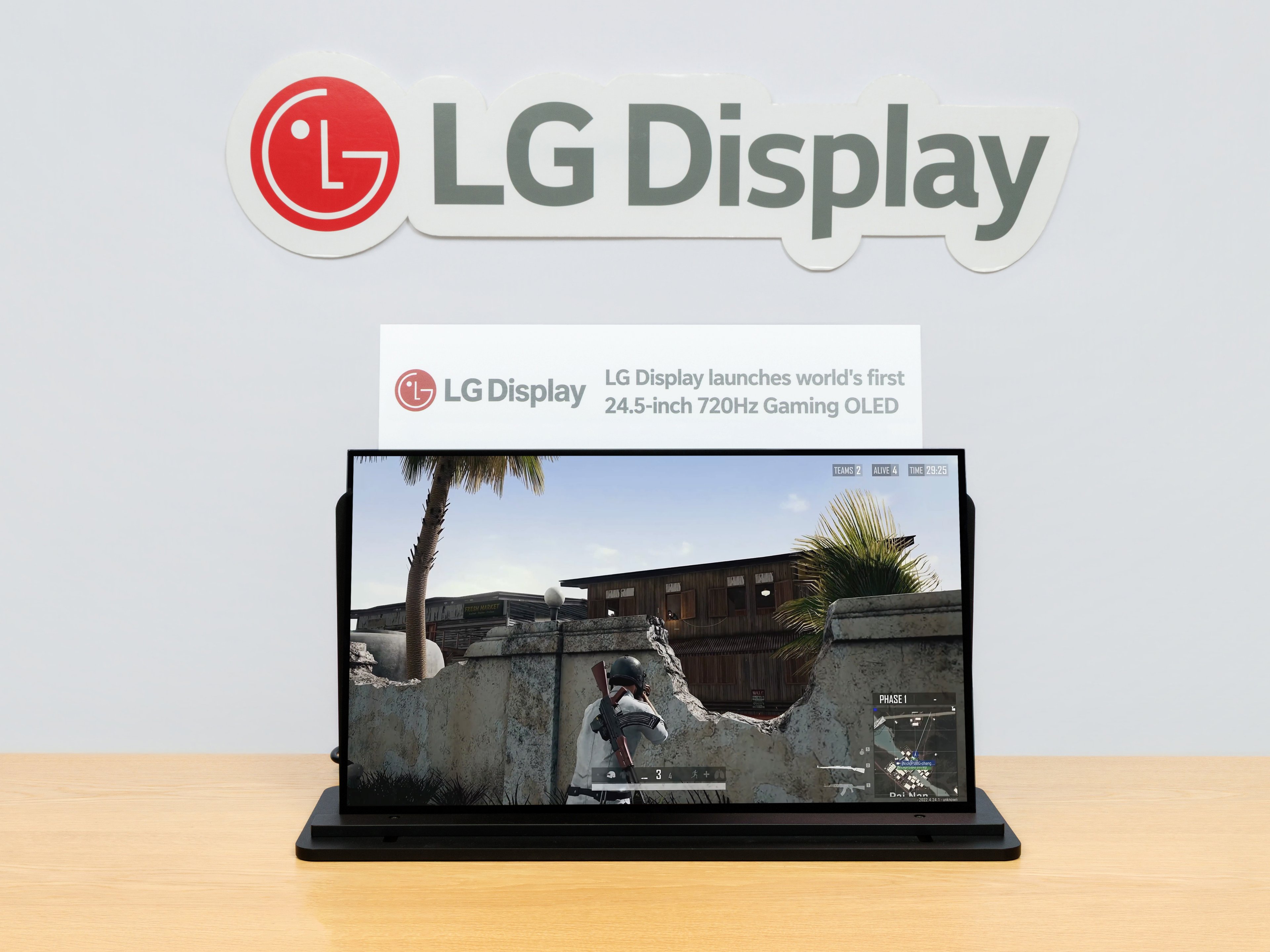
SEOUL, Korea (September 21, 2026) – LG Display, the world’s leading innovator of display technologies, announced today its launch of a 24.5-inch 720Hz Gaming OLED panel, leading the esports monitor market paradigm.
The company's 24.5-inch 720Hz Gaming OLED panel is the first-ever OLED panel tailored specifically for esports.
Standard monitors used for esports are primarily in the 24-inch class, enabling players to view the entire screen at a glance.
By initiating mass production of its 24.5-inch 720Hz Gaming OLED panel, LG Display aims to pioneer the mainstreaming of OLED technology across the esports monitor market.
The panel realizes the world’s highest refresh rate (720Hz) among gaming OLED displays as well as the fastest response time (0.02ms). Refresh rate refers to the number of times per second a screen updates, so 720Hz means the screen refreshes 720 times per second. The core technology lies in a stable driving algorithm, going beyond simply displaying scenes.
LG Display developed a proprietary algorithm to stably drive the 720Hz refresh rate even at FHD (1920x1080) resolution, applying an integrated solution spanning from panel design to the driving system.
Through this ultra-high refresh rate and lightning-fast response time, motion blur and ghosting are dramatically reduced, delivering an overwhelming user experience in fast-paced genres such as first-person shooter (FPS) and racing games. For example, the panel provides exceptional clarity and smoothness, clearly capturing the flash of a gun muzzle or the speed of a vehicle hurtling around a track.
Furthermore, unlike LCDs that require a backlight, each pixel emits light independently to achieve highly vivid picture quality, maximizing player immersion.
The panel has first been applied to global monitor manufacturer ASUS's new gaming monitor, the ROG Swift OLED PG259QWS Ace. This monitor has been selected as the official esports monitor for PGL CS2 Major Singapore 2026, one of the biggest tournaments in the Counter-Strike 2 calendar.
With the launch of its 24.5-inch 720Hz Gaming OLED panel, LG Display plans to accelerate its strategy to target the esports market. The company intends to lead the gaming display market based on its full lineup ranging from the 20-inch to the 40-inch class, with some products featuring its proprietary Dynamic Frequency & Resolution (DFR) technology. To further widen the gap with followers, LG Display is accelerating AI transformation (AX) across all areas of gaming display development.
“As a technology-driven company, we will lead the transition to OLED in the gaming monitor market and lead the mainstreaming of OLED in the global market,” said Hyeon-woo Lee, Head of the Large Display Business Unit at LG Display.
-
 PR LG Display unveils FLiPP, achieving dream next-generation OLED technology2026-08-19 See details
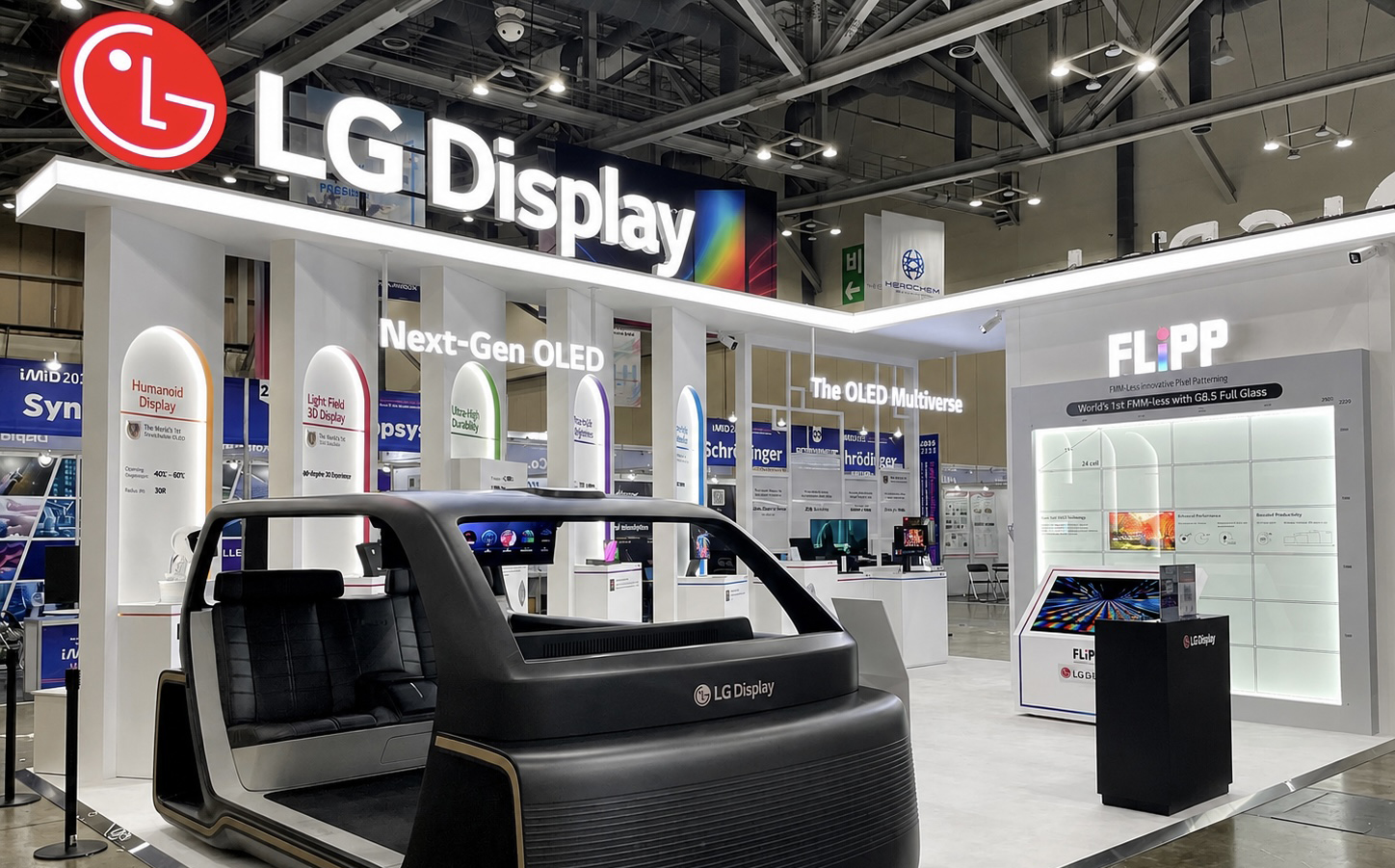
SEOUL, Korea (August 19, 2026) – LG Display, the world’s leading innovator of display technologies, announced today that it has successfully developed a dream OLED patterning method that is free from the conventional fine metal mask (FMM) process, using its own proprietary technology. Its groundbreaking FMM-less method delivers much greater flexibility in mass production as well as brighter panels with longer lifespan and lower power consumption.
The company will unveil FLiPP (FMM-Less innovative Pixel Patterning) for the first time in the world at the International Meeting on Information Display (IMID) 2026 in Busan, where LG Display will host a dedicated exhibition hall for three days from Aug. 19.
Compared with panels produced using FMMs under identical conditions, FLiPP enables displays to increase brightness by 1.6 times, extend lifespan by 2.4 times, and reduce power consumption by 13%. This is because FLiPP improves the aperture ratio — the proportion of the total display area occupied by RGB pixels — by approximately 55%.
The FMM method adds to manufacturing costs as expensive new FMMs must be produced whenever the panel size or resolution changes. In addition, due to the inherent properties of metal, large masks tend to sag in the center under their own weight, causing misalignment and sometimes resulting in color-mixing defects.
FLiPP eliminates the disadvantages associated with the metal plates used in the FMM process that has been the mainstream OLED manufacturing method for over a decade. The FMM process requires large mother glass substrates, such as 8.6th-generation or other 8th-generation (2,200 × 2,500 mm) substrates, to be divided and processed as half-cut substrates due to the limited size of FMM sticks.
After a year of concentrated R&D, LG Display came up with FLiPP as a new OLED manufacturing paradigm. Unlike the FMM method, which may be compared to a stencil art technique where red, green, and blue (RGB) organic materials are evaporated through tiny holes in metal plates, FLiPP coats RGB pixels in order, secures them in precise positions, and incorporates photolithography — employing precision UV light etching to erase unnecessary areas during OLED pixel patterning.
Leveraging its existing large-sized Tandem WOLED production infrastructure and technical expertise, FLiPP has allowed LG Display to become the first display company to manufacture FMM-less OLEDs using 8.5th-generation mother glass as a single whole piece. Compared to the production of OLED laptop panels of the same size made using FMMs or other FMM-less methods that require divided substrates, FLiPP delivers up to 64% higher mother glass utilization efficiency. As a result, less substrate material is wasted and FLiPP directly translates into higher productivity and lower manufacturing costs.
As the world’s only FMM-less manufacturing process for 8.5th-generation OLED panels, LG Display has filed trademark applications for FLiPP in Korea and key global markets.
The company is strengthening its OLED technology leadership by combining RGB OLED, widely regarded as the most advanced OLED technology available today, with FLiPP, its next-generation innovative manufacturing process, to maximize production flexibility and efficiency.
One of FLiPP’s greatest advantages is that it is free from panel size and resolution constraints. In theory, it can be used to produce displays ranging from 1 inch to 100 inches and can be applied not only to conventional panels but also to VR and AR displays, making it a virtually universal, “ultimate technology.”
Starting with IT applications such as tablets and monitors, it will expand its range of FLiPP-manufactured panels to cover a range of products from 1-inch wearable devices to ultra-large TVs — tailoring products to customer needs.
“We were able to successfully realize FLiPP, a next-generation OLED patterning technology referred to as a ‘dream technology,’ by bringing together our proprietary WOLED technologies and know-how," said Choi Young-seok, CTO at LG Display. "Through our participation in IMID, we will lead next-generation OLED technologies and accelerate market differentiation.”
Meanwhile, LG Display’s next-generation OLED TV panel driving technology, Hyper Double Scanning (HDS), has been recognized for its technological excellence by winning the IMID “Display of the Year Award.” The award is presented to the most outstanding product among those commercialized each year. LG Display is currently mass-producing its entire lineup of OLED TV panels with HDS and plans to continue leading the global premium TV panel market.
-
 PR LG Display Reports Second Quarter 2026 Results2026-07-22 See details
SEOUL, Korea (Jul. 22, 2026) – LG Display today reported unaudited earnings results based on consolidated K-IFRS (International Financial Reporting Standards) for the three-month period ending June 30, 2026.
- Revenues in the second quarter of 2026 increased by 1% to KRW 5,612 billion from KRW 5,534 billion in the first quarter of 2026 and rose 0.5% compared to KRW 5,587 billion in the second quarter of 2025.
- Operating loss in the second quarter of 2026 was KRW 108 billion, compared to the operating profit of KRW 147 billion in the first quarter of 2026 and with the operating loss of KRW 116 billion in the second quarter of 2025.
- EBITDA in the second quarter of 2026 was KRW 872 billion, compared with EBITDA of KRW 1,141 billion in the first quarter of 2026 and KRW 1,054 billion in the second quarter of 2025.
- Net loss in the second quarter of 2026 was KRW 419 billion, compared to the net loss of KRW 576 billion in the first quarter of 2026 and with the net profit of KRW 891 billion in the second quarter of 2025.
LG Display announced today that it continued its profitability in the first half of 2026, maintaining the company’s positive earnings momentum. It recorded cumulative revenues of KRW 11.15 trillion and an operating profit of KRW 39 billion on a consolidated basis for the first half of 2026, returning to profitability compared to the same period last year, when it posted revenues of KRW 11.65 trillion and an operating loss of KRW 82.6 billion.
For the second quarter of 2026, the company recorded revenues of KRW 5.61 trillion and an operating loss of KRW 107.7 billion.
The first half is traditionally a slower season for the display industry, as set manufacturers adjust component inventories ahead of new product launches in the second half of the year. In addition, the second quarter reflected one-off expenses associated with workforce efficiency measures.
Despite these factors, LG Display improved its first-half operating results by KRW 121.6 billion compared to the same period last year, successfully minimizing the impact of seasonal demand weakness and one-time costs. The performance reflects tangible progress in advancing its OLED-centered business portfolio based on its technology leadership.
In the second half of the year, LG Display plans to further strengthen its business competitiveness by securing best-in-class technologies and advancing technology-driven cost innovation. In particular, beyond conventional cost reduction efforts, the company will maximize efficiency across the entire value chain – from development and manufacturing to production – through technology innovation centered on AI Transformation (AX). LG Display thus aims to fundamentally enhance its business structure and sustain growth by delivering differentiated customer value.
In its small and mid-sized business, the company will strengthen its competitiveness by focusing on high-end products built on its differentiated technological advantages. At the same time, it plans to respond flexibly to changing market conditions by maximizing its stable technology, development, and mass production capabilities.
In its large-sized business, LG Display will further expand its leadership in the premium market by leveraging a product lineup that combines differentiated technologies with cost competitiveness. As the monitor market continues to transition from LCD to OLED, the company plans to strengthen its portfolio of high value-added products, including Gaming OLED monitor panels, while expanding shipment volumes.
“Excluding one-time factors, our underlying business profitability stayed positive in the second quarter,” said Sung-hyun Kim, CFO of LG Display. “In the second half, we will continue improving our annual performance by advancing cost innovation and further strengthening our business competitiveness, while establishing a more stable and sustainable profit structure.”
-
 PR LG Display presents vision of lifestyle transformation at K-Display 20262026-07-22 See details
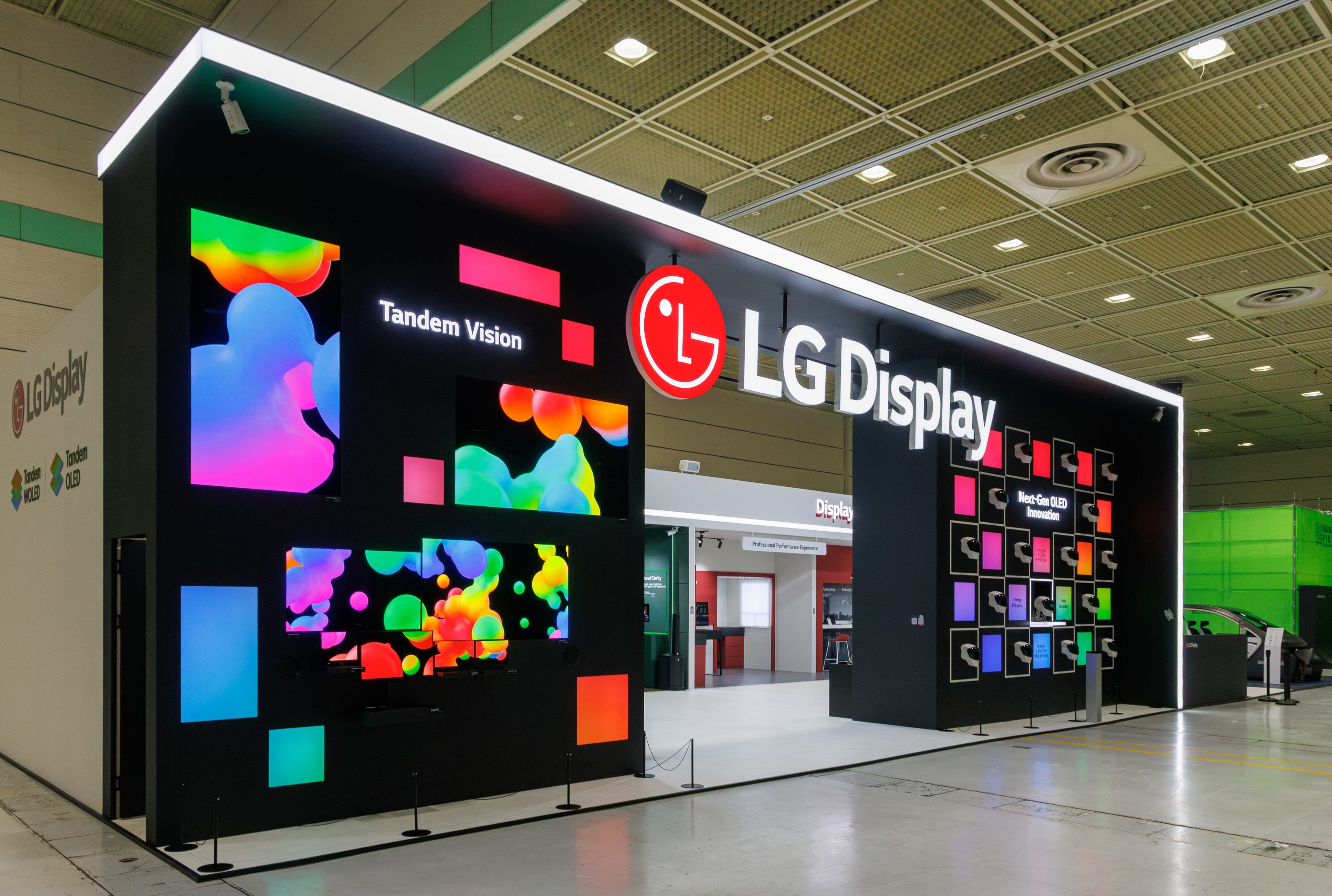
SEOUL, Korea (July 22, 2026) – LG Display, the world’s leading innovator of display technologies, announced today its participation in K-Display 2026 at Seoul’s COEX for three days from July 22, as the company seeks to accelerate its market differentiation based on next-generation OLED technologies.
Now in its 25th year, K-Display 2026 is Korea’s largest display exhibition, hosted by the Korea Display Industry Association.
Under the theme “Beyond Display, A Window to Connection,” LG Display is showcasing innovative products and technologies that promise to revolutionize daily lives now and in the future, ranging from humanoid robot displays to solutions for monitors, TVs, IT, and mobility.
In the Visionary zone of its exhibit, the company is highlighting a media wall using 83-inch ultra-large OLED TV panels — featuring Tandem technology’s dramatic innovations such as enhanced picture quality and lifespan — as well as IT and monitor panels. This presentation emphasizes the business competitiveness that can be realized through LG Display's unique full OLED lineup.
The company’s P-OLED display solution aimed at the emerging humanoid robot market is also making its debut in Korea.
LG Display’s thin and lightweight P-OLED delivers exceptional picture quality. Crucially, it operates reliably even in extreme environments ranging from -30°C to 85°C. Initially applied to automotive displays and later expanded to IT devices, P-OLED is now highly regarded as the optimal display solution for humanoids deployed across various demanding industrial environments.
In its Home zone, the company is holding various interactive events so that visitors can experience OLED technology integrated into daily life.
With the rapidly growing gaming monitor market in mind, LG Display is hosting a special gaming tournament pitting Kim Blue, a popular gaming influencer with two million YouTube subscribers, against general visitors — allowing attendees to experience firsthand the superior performance of LG Display’s Gaming OLED panels.
The gaming lineup on display — including the newly unveiled 24.5-inch 540Hz, 27-inch DFR 720Hz, and 39-inch 5K Gaming OLEDs — has achieved the gaming performance "triple crown" by boasting world-leading refresh rates, brightness, and response times.
In addition, the Home zone is replicating real-world home environments during the day and night. This space has been designed to demonstrate the overwhelming picture quality superiority of LG Display’s Tandem WOLED TV panels, which remain completely unaffected even when exposed to strong ambient sunlight or indoor lighting. Equipped with LG Display’s proprietary Primary RGB Tandem 2.0 technology, Tandem WOLED TV panels reach the industry’s highest peak brightness of 4,500 nits and achieve an ultra-low reflectance of under 0.3%, ensuring an immersive viewing experience anytime, anywhere.
In its Work zone, the company is unveiling its 27-inch 5K OLED panel for the first time, offering the highest specifications for office monitors. With a high resolution of 220 PPI and an RGB stripe structure, it expresses vibrant colors with extreme precision and zero color bleeding. This new product is tailored for professional environments, including graphic design, stock trading, and medical applications. Notably, it is being honored with the Minister of Trade, Industry and Energy Award at the event — having been acclaimed as the optimal technology for implementing high-performance AI, replacing traditional LCDs in the premium monitor market.
The zone is also gathering high-definition, highly portable, and power-efficient OLED panels optimized for IT devices. These include a 16-inch OLED panel for laptops featuring a variable refresh rate. It provides the ultimate video viewing experience at a high refresh rate of 120Hz, while being able to significantly reduce power consumption by lowering the refresh rate down to 20Hz on static screens during office tasks that do not require fast screen transitions.
Furthermore, LG Display is showcasing IT display solutions equipped with a new, Low-Temperature Polycrystalline Oxide (LTPO)-based pixel driving system, including a 13-inch OLED for tablets, 7-inch OLED for smartphones, and 1.96-inch OLED for smartwatches. These panels minimize battery consumption while dramatically increasing screen brightness to significantly improve outdoor readability.
LG Display is additionally hosting a Mobility zone, where it is introducing a digital cockpit that utilizes innovative display technologies to maximize the space efficiency of vehicle interiors. Visitors can board the cockpit mock-up to experience a variety of automotive displays.
In the front seat, a 48-inch Pillar-to-Pillar (P2P) display spans the dashboard, allowing the driver to view navigation instructions while the front-passenger enjoys movies or games. In the rear passenger area, an 18-inch Slidable OLED is integrated into the ceiling. With the touch of a button, it glides down and facilitates everything from entertainment to video conferences on an 18-inch screen — seamlessly incorporating daily life into the vehicle experience.
“K-Display 2026 is a crucial stage for us to directly demonstrate our technological competitiveness as a technology-driven company,” said an official at LG Display. “We will continue to differentiate ourselves in the market through OLED innovation, and solidify our foundation for accelerated growth through customer-centric business expansion.”
-
 PR LG Display reveals experimental study results on Gaming OLED performance2026-07-09 See details
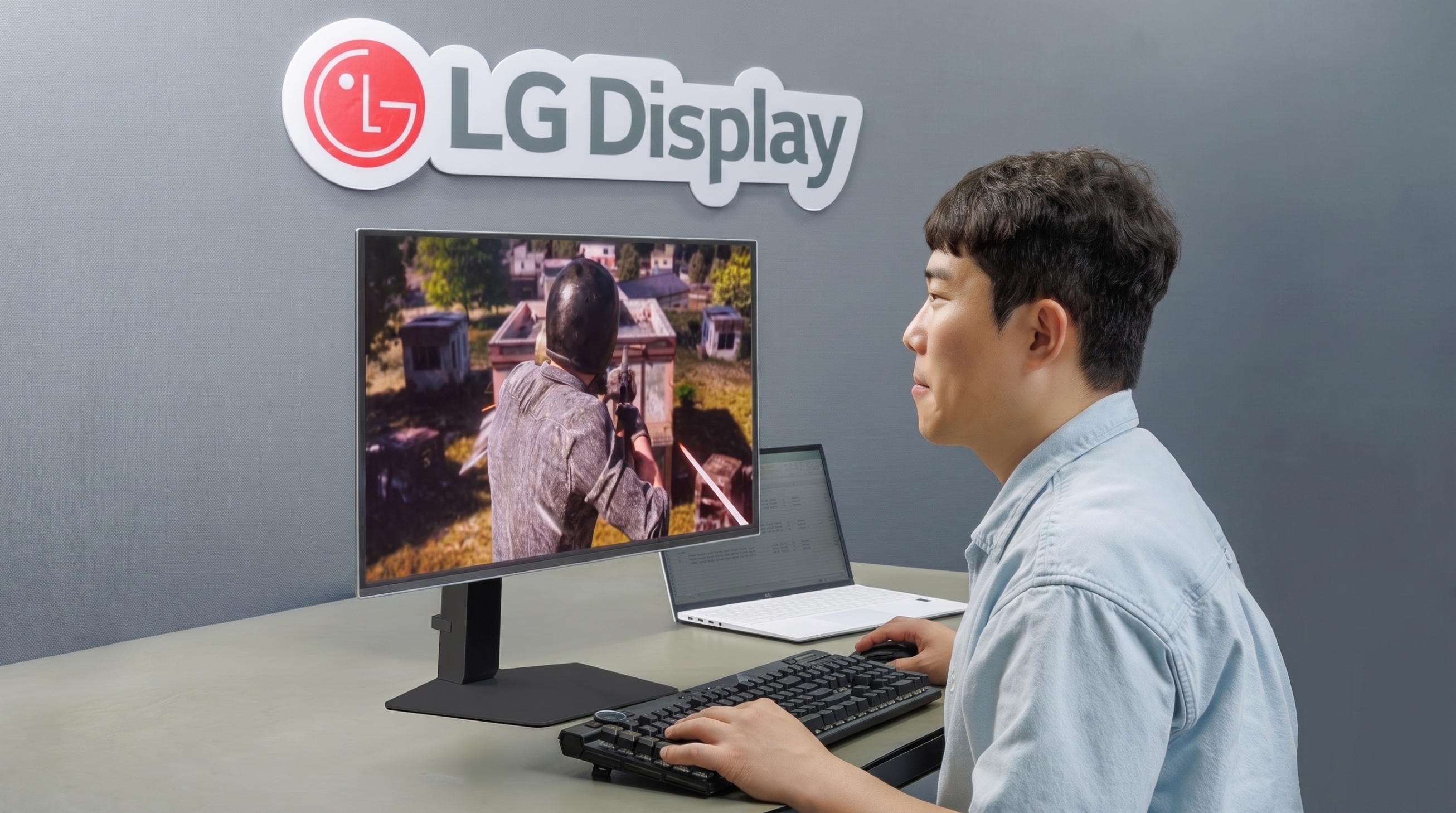
SEOUL, Korea (July 9, 2026) – LG Display, the world’s leading innovator of display technologies, announced today the outcomes of its experimental study on how the refresh rate of gaming monitors affects actual real-world gaming performance, with its related research paper published at an international academic conference.
According to the paper, “A study on the impact of refresh rate on real-time FPS gaming performance,” using a monitor with a higher refresh rate enhances object recognition in dynamic scenes, thereby improving reaction speed and accuracy.
For the experiment, 31 adult males described as general gamers experienced four different refresh rates — 60Hz, 240Hz, 360Hz, and 480Hz — in random order while playing a first-person shooter (FPS) game. Quantitative indicators included hit score (number of successful hits) and event interval time (time elapsed from target appearance to elimination), while qualitative indicators included smoothness, ease of tracking, and overall preference.
In terms of hit score, the gamers’ win rate improved by 38% at the highest level of 480Hz compared to the lowest level of 60Hz.
Despite significant gains being achieved even at 240Hz, the win rate increased by an additional 10% at 480Hz. This indicates that gaming performance continues to scale consistently as the refresh rate increases.
Qualitative satisfaction also improved as the refresh rate rose. Participants reported that higher levels resulted in smoother visuals and made it easier to track moving targets, which directly contributed to a stronger overall preference.
These performance advantages are attributed to the physical characteristics of OLED monitors. Higher OLED refresh rates significantly reduce input lag — the delay between input signals and on-screen response — as well as motion blur. In the experiment, input lag was reduced by more than 10 milliseconds at 480Hz compared to 60Hz. This reduction enabled gamers to determine the positions of fast-moving enemies more accurately.
Building on these findings, LG Display plans to continue strengthening its high-refresh-rate Gaming OLED lineup and further solidify its leadership in the gaming monitor market.
This past May, LG Display’s 27-inch 540/720Hz (DFR) OLED panel, which features the world’s highest refresh rate, was honored with the “Display of the Year” award by the Society for Information Display (SID), the most prestigious organization in the field.
“Building on our experience in commercializing industry-leading performance products such as the 27-inch 540/720Hz (DFR) OLED, we will further strengthen our technological competitiveness in the gaming display market while securing core technologies for next-generation displays as a technology-driven company,” said Choi Young-seok, CTO at LG Display.